Kansas Travel (KansasTravel.org) recently featured the Great Bend Brit Spaugh Zoo. The reviewer noted that it is one of the largest free zoos in Kansas and is open daily. It praised the Raptor Center, which was added to protect and conserve birds of prey through rehabilitation, education, research, and habitat preservation.
Behind the scenes, the zoo is also a raptor rehabilitation center, helping injured raptors recover so, if possible, they can be returned to the wild.
The zoo’s social media page includes video of the KuneKune pigs, Spud and Kumara, getting acquainted with each other.
Zoo staff have been slowly introducing Spud and Kumara.
“We sometimes get asked why some of our animals live alone,” Zoo Director Ashley Burdick posted. “Many species are solitary in nature and only encounter members of their species during mating. There are also some individuals that prefer to live alone and wouldn’t do well with other animals.
“Introductions are a slow process; we can’t just put animals together and hope for the best. We start by allowing them to interact with each other with a fence between them. If that goes well for a while, we will allow them to share space for short periods of time under close supervision. As long as that goes well they can spend longer periods of time together.”
That doesn’t always work. The zoo tried unsuccessfully to introduce the male lion to a shared space with the two females, but the relationship wasn’t there. “It would be dangerous to continue trying to force it,” Burdick concluded.
Take a closer look
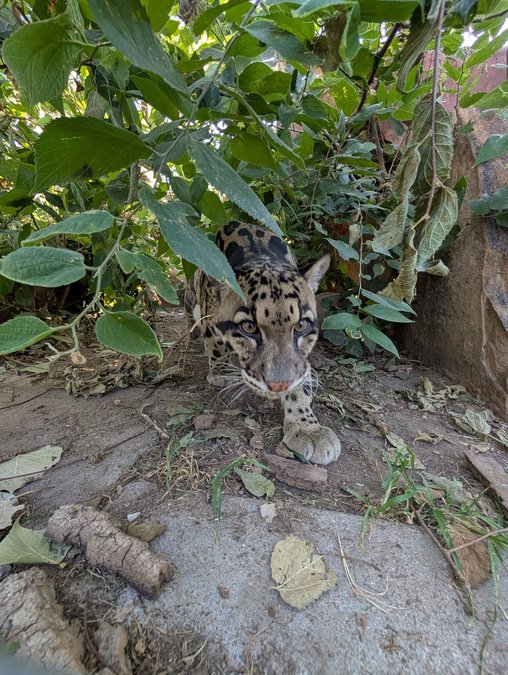
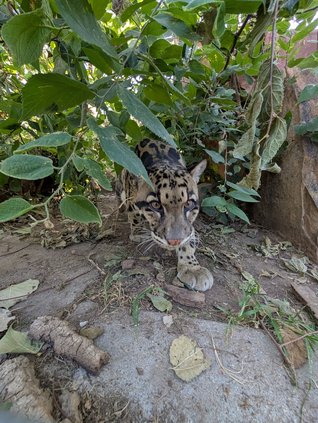
With the brutally hot weather, many animals were given access to their inside areas where it’s cool. Others may venture outdoors, where the public can see them, but it may require a keen eye to spot them.
Some visitors have asked why the staff allow vegetation to grow in the animal exhibits. Burdick responded: “The comfort of the animals is always our top priority. Providing cover and hiding opportunities is crucial for the animals to feel comfortable and more likely to spend time out in their yards. This does mean visitors may need to spend more than 30 seconds looking for an animal in an exhibit.
“As stated on the sign in the lobby, when it’s this hot, animals are given access to their inside areas where it’s cool so they can choose where to spend time. It’s brutally hot; they do not want to be out and about running around.”
Zoo News is a monthly feature of the Great Bend Tribune. Send questions about the Great Bend Brit Spaugh Zoo to sthacker@gbtribune.com.