Sunday was National Pearl Harbor Remembrance Day, also known as simply Pearl Harbor Day. It is observed annually on Dec. 7 in the United States to remember and honor the 2,403 Americans who were killed in the Japanese surprise attack on Pearl Harbor in Hawaii on Dec. 7, 1941. This led to the United States declaring war on Japan and entering World War II.
In addition to the Americans who died in the attack, 1,178 more were injured. Four U.S. Navy battleships were sunk and four others damaged. Other ships were damaged and 188 aircraft were destroyed and 159 were damaged.
This year, on the 84th anniversary of the attack, a service took place at 11:55 a.m., the exact time the attack began, in the K.C. Metro area. After a moment of silence, Sollie Flora, Mayor of the City of Mission, Kansas, said, “It’s important to remember those who made the ultimate sacrifice for our country. There are a lot of different veterans events, but I think it’s important to focus on Pearl Harbor, an attack on U.S. soil, and making sure we’re remembering their memory.”
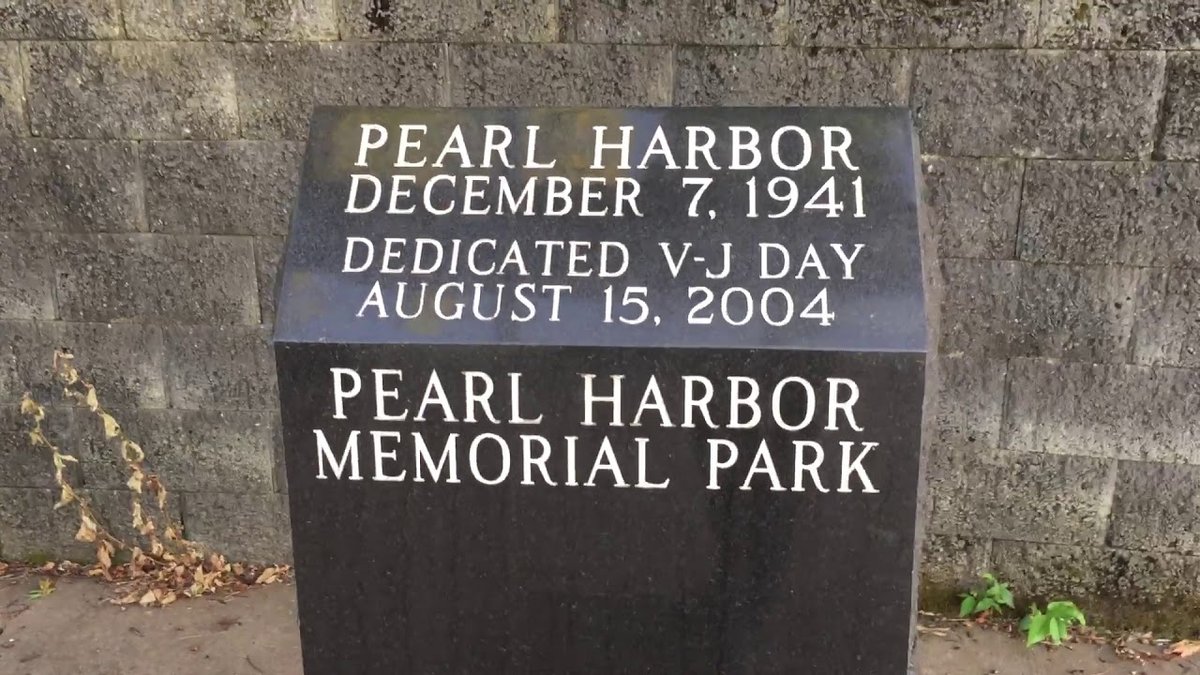
The American Legion provided a color guard, and each of the 56 names of survivors who returned to eastern Kansas was read to remember their service to our country. Just down the street from the service, their names are also remembered at Mission’s Pearl Harbor Memorial Park.
When we ask why Pearl Harbor happened, it is suggested Japan believed it could severely cripple the U.S. fleet and buy them time in the Pacific and Southeast Asia. According to the Modern War Institute, the opposite occurred. “In the space of a few hours, America became the world’s foremost defender of liberty.” For this reason, the institute proclaims, “Pearl Harbor remains a poignant symbol of freedom and sacrifice.”
The day after the attack, President Franklin D. Roosevelt said Dec. 7 was “a date which will live in infamy,” and so it was. It changed world history, shifting the balance of global power, ending isolationism, leading to the creation of the United Nations and NATO, and accelerating industrial and military technology and expansion. It taught us the importance of shared intelligence, constant vigilance and maybe even something about reconciliation down the line.