Some of the veterans who need help the most are the least likely to ask for it.
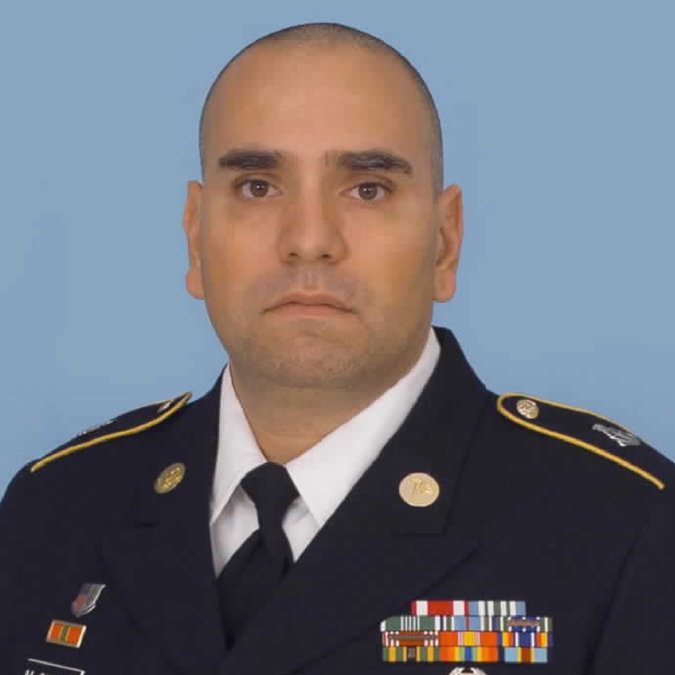
Jeff McQuade understands that. After spending 20 years in the U.S. Army, he knows the independence and self-reliance that military service instills. He also knows those same qualities can make it difficult for veterans to acknowledge when they need a helping hand.
Today, as a Veteran Support Specialist/Peer Support at the Center for Counseling and Consultation, McQuade has traded his military uniform for a different kind of service, helping fellow veterans navigate challenges, access resources and find their footing long after their military careers have ended.
“Serving veterans is more than a job for me. It’s a way to continue serving others and giving back to my community,” he said.
For McQuade, that commitment to service began at age 21 when he enlisted in the Army, following in the footsteps of both his grandfathers, who served during World War II.
“The Army offered the honor to serve and the opportunity for education and travel,” he said. “Both my grandfathers were WWII veterans and that also influenced my decision.”
Over the next two decades, McQuade would serve at installations across the United States and overseas, including Fort Huachuca, Arizona; Fort Buchanan, Puerto Rico; Hill Air Force Base, Utah; Fort Sam Houston, Texas; the Uniformed Services University of the Health Sciences in Maryland; and Naval Support Activity Naples, Italy.
His military occupational specialty was 68T, animal care specialist, a position that gave him opportunities few soldiers experience.
His first duty station in Arizona remains one of his fondest memories. There, he worked with military working dogs and cavalry horses assigned to B Troop, experiences that required patience, discipline and teamwork.
“Working with these animals requires patience, discipline, and teamwork, and it gave me a unique experience that few service members have the chance to enjoy,” he said.
The assignment also introduced him to lifelong friendships and mentors who helped shape his military career. One particularly memorable distinction was being mentioned in a book written by his commanding officer.
Although McQuade was never deployed during his military career, his years in uniform left a lasting impact.
And when those 20 years came to an end, he discovered that adjusting to civilian life presented challenges of its own.
After living overseas, McQuade and his family had to rebuild their lives in a new community, establishing connections and adjusting to life without the familiar structure of the military.
“We essentially had to start over by finding our place in a new community, establishing professional and personal connections, and adapting to a different pace of life,” he said. “Leaving behind the structure and support system of the military was challenging, but it ultimately helped us grow and become more self-reliant.”
That experience would eventually help him relate to the veterans he now serves.
McQuade’s interest in helping fellow veterans developed while working at the Center for Counseling and Consultation, where he encountered former service members facing a wide range of challenges.
“I first became inspired to help other veterans while working as a case manager,” he said. “Meeting veterans in the community and helping them access the support and resources they needed was incredibly rewarding.”
What began as an opportunity to assist others grew into a personal mission, eventually leading to his current role as Veteran Support Specialist/Peer Support at the center.
Today, McQuade helps veterans connect with benefits, health care, counseling and community resources. He assists with navigating programs, coordinating care and overcoming obstacles that can prevent veterans and their families from receiving assistance.
Some veterans seek help on their own. Others are referred through community partners or come to the center for counseling services. McQuade also helps connect them with programs such as the Staff Sgt. Parker Gordon Fox Suicide Prevention Grant Program.
But in rural Kansas, helping veterans can come with unique challenges.
“One of the biggest struggles I see veterans facing today is access to resources and services, especially for those living in rural areas,” he said. “Many of the veterans we serve are spread across a large geographic region, which can make it difficult to connect with healthcare, counseling, benefits, and other support programs.”
Distance isn’t the only obstacle.
Many veterans have spent years learning to solve problems independently. Asking for help can feel uncomfortable, even when their circumstances become overwhelming.
“Another challenge is that many veterans are highly self-sufficient and independent,” McQuade said. “They are used to solving problems on their own and often do not ask for help, even when they need it.”
For McQuade, reaching those veterans means more than simply providing a list of services. It means listening, building trust and helping them understand they don’t have to face their struggles alone.
Sometimes, that assistance can change someone’s life.
McQuade recalls working with a veteran who was experiencing housing difficulties. By connecting the individual with available resources and working with the Department of Veterans Affairs, he helped secure stable housing and support services.
“Seeing the relief and hope that came from knowing they had a safe place to live was incredibly rewarding,” he said. “Moments like that remind me why I do this work.”
It’s those moments that sustain him when the work becomes difficult.
“What keeps me going is knowing that the work matters,” McQuade said. “I have met many veterans who are struggling but do not always ask for help. When I can connect someone with the resources they need and see the positive impact they have on their life, it makes the challenges worthwhile.”
His own military background gives him a connection to the people he serves, but McQuade emphasizes that his commitment extends to veterans from every branch of the armed forces.
Having served alongside members of different branches, he understands that military experiences vary, but the need for support and understanding is universal.
He also credits his family with providing the encouragement that has allowed him to continue serving others.
“My family has been my biggest source of support,” he said. “They have stood by me throughout my military service and civilian career, encouraging me every step of the way.”
Looking ahead, McQuade has a vision for improving veteran services in Barton County and surrounding communities.
He would like to see a centralized location where veterans could access health care, benefits assistance, counseling and community organizations without traveling from one office or town to another.
“If I could change one thing, it would be making resources easier for veterans to access after leaving the military,” he said. “I would like to see a one-stop shop where veterans can connect with healthcare, benefits, counseling, and community services in one location.”
He believes ordinary community members also have an important role in supporting those who have served.
Sometimes, making a difference requires little more than listening, offering compassion or helping a veteran connect with someone who can provide assistance.
“Many veterans do not always ask for help, so showing compassion and understanding can make a meaningful impact,” he said. “Even small acts of support can help veterans feel connected to their community and ensure they know where to turn when they need assistance.”
As Veterans Day approaches, McQuade’s story is a reminder that military service doesn’t necessarily end with retirement.
For some, it becomes the foundation for an entirely new mission.
After two decades of serving his country in uniform, McQuade continues to find purpose in serving the people who once wore one.
“Being able to help a veteran overcome a difficult situation and improve their quality of life is one of the most meaningful parts of my job,” he said.