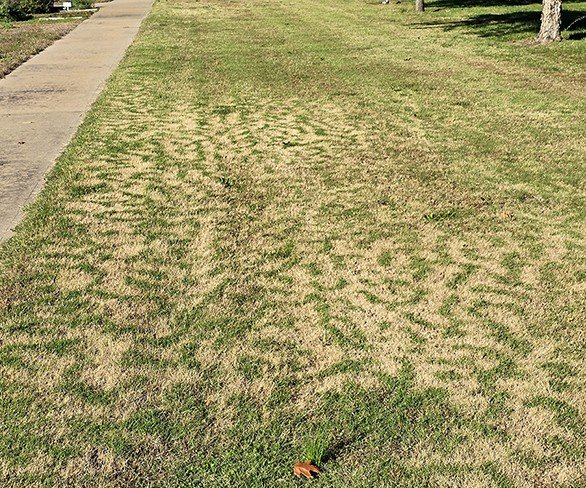
The drought monitor report wasn’t published as this is being written, but there should be little change from last week. Almost two-thirds of Barton County is abnormally dry, with a sliver of the northwest out of drought. From about the river south and into northern Stafford County, there is moderate drought. The six- to 10-day forecast (Nov. 29 to Dec. 3) indicates a 70 to 80% chance of above-normal temperatures and a 33 to 40% chance of leaning above-normal for precipitation. The eight- to 14-day forecast (Dec. 1 to 7) indicates a 60 to 70% chance of above-normal temperatures and a 40 to 50% chance of leaning above-normal for precipitation. We have finally had a hard frost to officially end the growing season. Wheat should be hardening off but still have the capability to set tillers. It’s too warm for what would be preferable. Hopefully, the above-normal precipitation happens, but normal is only around an inch of liquid precipitation.
Everyone is well aware that inflation has hit particularly hard regarding food. There are a variety of reasons: increased transportation costs, severe weather (drought, floods, hurricanes, extreme cold and heat, wind), insect and disease pressure, tariffs and high input costs for producers. Some prices, such as for eggs, have come down substantially. Here in Kansas, we are used to thinking of farming as corn, wheat, grain sorghum, soybeans and cattle, but it varies greatly across the country. So, today, what is the producer’s share of the cost of your Thanksgiving meal?
This data is courtesy of the National Farmers Union and sourced from the USDA. Remember, these are prices averaged across the nation, so there is naturally fluctuation. Five pounds of Russet potatoes will cost around $4.40, with the producer receiving 75 cents, or 17%. A 15-ounce can of pumpkin puree averages $1.99, and the producer receives 17 cents, or 8.5%. Twelve ounces of actual cranberries will set you back $2.99, with the producer receiving 98 cents, or 33%. A 15-ounce can of name-brand sweet corn is around $1.49, and the producer receives 32 cents, or 21%. Twelve ounces of fresh green beans for everyone’s favorite casserole runs about $3.49, and the producer receives 58 cents, or 17%. Quality dinner rolls to pop in the oven cost $3.29, while the wheat grower receives 7 cents, or 2%. A two-pound boneless ham costs about $13.98, with the hog producer receiving 87 cents, or 6%. Finally, a Butterball turkey is approximately $2.49 per pound, while the poultry producer receives 6 cents per pound, or 2.4%.
Naturally, you can save money with store or off brands, and some are just fine. Many, however, are of lower quality. Please take time as you enjoy your hopefully bountiful Thanksgiving meal and consider how little of the money you spent actually goes into the producer’s pocket.
Dr. Victor L. Martin is the agriculture instructor/coordinator for Barton Community College. He can be reached at 620-792-9207, ext. 207, or martinv@bartonccc.edu.