The drought monitor report as of Tuesday, Oct. 6, indicates the beneficial effects of last week’s rain. The state has moved from 29-51 percent out of dry conditions, primarily the northern half of the state and parts of Southwest Kansas. Almost half of Barton County and much of the surrounding area to the south range from moderate to severe drought. The northern third of Barton County has improved to exceptionally dry. The six-to-10-day forecast (Oct. 13-17) indicates a 33-40% chance of leaning above normal for temperatures and 33-40% of leaning above normal for precipitation. The eight-to-14-day forecast indicates (Oct. 15-21) indicates normal temperatures and a continued 33-40% chance of leaning above normal for precipitation. The dry period should allow for wheat planting to proceed and harvest to ramp up, although corn harvest is wrapping up.
Most of the area has received significant rain over the last two weeks. Very much needed and beneficial. Some received well over five inches of rain and dealt with saturated soils keeping them out of the field. The last week has seen no rain, and most are getting back into the field.
This week there is a chance of rain midweek from another leftover Pacific Ocean hurricane. Quite a change from August and most of September.
All of this is to ask a question. How do we keep this soil moisture and maximize its efficiency for crops such as wheat, canola, and cover crops?
Another question to ask is how could we have more effectively captured and stored this precipitation?
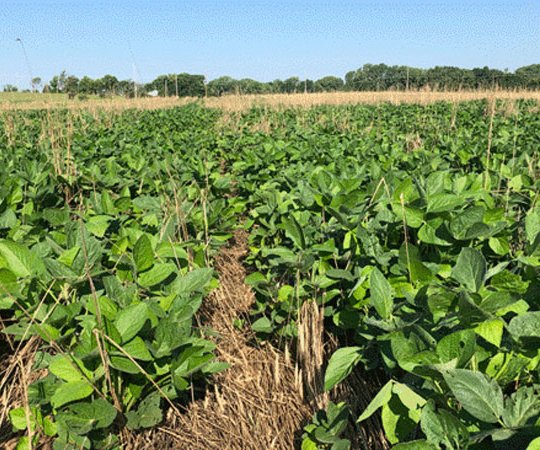
- How could we more effectively capture precipitation? Producers must make a concerted effort to accomplish three items. First, develop better soil structure through minimizing, and if possible, eliminating tillage. This will allow for the development over time of a better, more continuous, pore system with a range of pore sizes. This allows for a better infiltration rate at saturation and for water to move deeper into the subsoil. It also decreases runoff and evaporation from ponded water. Second, over time, build up stable organic matter levels to increase soil structure and water- holding capacity. This relates to decreasing tillage and may include items such as cover crops. Third, surface crop residue slows down heavy rains, allowing for better infiltration and protecting the soil surface.
- To keep the soil water we have, there are several practices that can help. First, build up stable organic matter levels over time to hold more water.
As in the previous paragraph, develop that continuous pore system with not just large but small pores to hold water. Second, surface crop residue decreases evaporation from the soil, acting as a vapor barrier, and decreasing soil temperature.
Lastly, while there are times tillage is necessary, minimize it, minimize aggressive tillage, and work, over time, toward eliminating it. And especially after decent rains – don’t till.
Dr. Victor L. Martin is the agriculture instructor/coordinator for Barton Community College. He can be reached at 620-792-9207, ext. 207, or martinv@bartonccc.edu.