BY KEITH LIPPOLDT
klippoldt@gbtribune.com
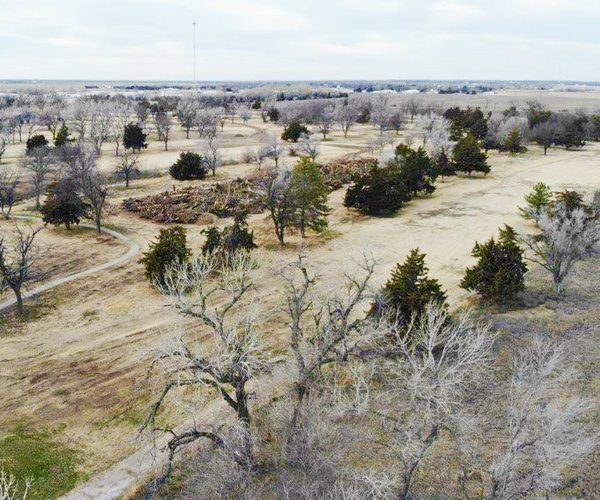
College Hill, technically NE 30 Road, can be a treacherous one mile drive when there is snow and ice covering it. Throughout the years, many vehicles have been found in the ditch, needing a tow or just a push to get free.
During the commissioners’ meeting Tuesday, Barton County Commissioner Shawn Hutchinson mentioned he has received calls from his constituents concerning the lack of sand and salt being laid down in advance of storms.
“We had discussed with our road and bridge director (Chris Schartz) how we could potentially make that road more safe,” Hutchinson said. “As most people know in the community, it’s a steep hill with high winds, and once it gets icy, it’s treacherous.”
Hutchinson then asked County Counselor Patrick Hoffman if he had any accident statistics pertaining to this road.
“I talked to Sheriff Bellendir this morning,” Hoffman said. “He didn’t have a number of slide-offs. He did say, it is regular thing. The reason they don’t have numbers is a slide off is not considered an accident. They don’t do a full accident report on them. But the deputies have to go out to make sure everyone in the vehicle is secured and gets a ride home and, obviously, make sure that no one has an additional accident on top of the slide-off. In talking to Sheriff Bellendir, he was like, anything that makes that road better in weather would be hugely important, because it is a real safety issue.”
In the earlier conversation with Schartz, Hutchinson asked why they aren’t salting that stretch of road. Schartz told him that it does no good because it just blows off when the wind picks up. Hutchinson related a story of a meeting he needed to attend in Claflin. Along the way, he was blasted with salt from a truck that was spreading generous amounts of it onto the road. On his way back to Great Bend after the meeting, approximately 45 minutes later, Hutchinson said the salt was no longer on the road. It had, indeed, blown off.
“I think they get out there with the plows pretty quick,” Hutchinson said. “Once it snows and once the snow stops, the guys are working long hours. The only thing we haven’t tried is brining that road.
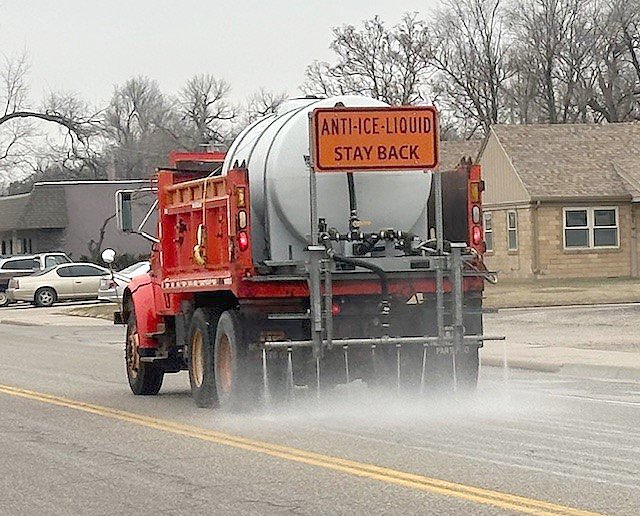
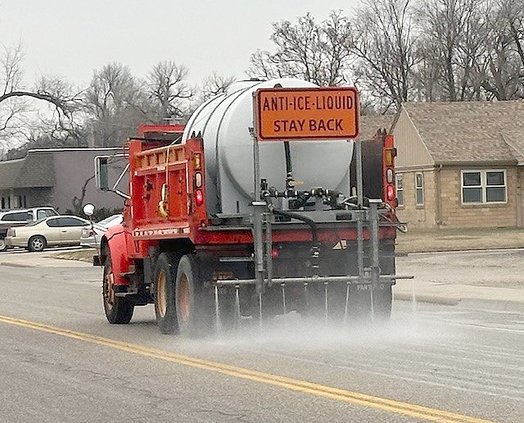
And our options for brining would be to buy a several-hundred thousand dollar brine truck, and potentially more equipment. And I thought, ‘Well, shouldn’t we just ask our partner in the city of Great Bend if they could just brine one mile of road for us and make that potentially a little safer? At least try it. And we got a response yesterday from Jason Cauley, public works director, basically denying our request, saying that, you know, it would take them more than two hours on a limited day where they’re already short staffed, and that setting a precedence, including like the college might ask them to brine their parking lot.
“Other citizens in the county may ask for their roads to be brined. The precedents and the public perception is that the city and the county would be working together. The cost of this, he added, (would be) up to $420, which we would gladly pay.”
Hutchinson then asked Hoffman about precedence.
“Precedence is difficult,” Hoffman said. “What is a precedence? My perspective would be, I have sympathy for the city because they have limited resources, like everyone else. The problem is, for the county to purchase a brining truck just to do this one mile of road would just not be feasible. But it kind of reminds me of how we have some different townships, that it wouldn’t make sense for them to buy certain equipment that the county has. When they have an emergency or have a situation, we charge them, but we use our equipment that they don’t have access to.
“I’d be interested if the city was interested, in doing some sort of memo that said, ‘this is just a one time – this is a special agreement, but this is a special stretch of road that’s utilized by a lot of residents of Great Bend city. But the road goes into the county and it’s just kind of a unique situation that when they built the community college outside the city limits, this all kind of got set in motion. And this is the solution to a problem that’s going to happen every couple years. We’d love to partner with them, and we’d gladly pay what a reasonable cost would be, so that we don’t have to try and finance a brining truck at taxpayer expense.”
Hutchinson made mention of the City’s concern for liability, to which Hoffman replied, “I wouldn’t be overly concerned, but I would gladly, in an agreement, shift that liability onto the county if that was something that was necessary to get this done.”
“As far as precedents, I think the county has a history of helping out the cities and the townships, all of them in different ways,” Hutchinson said. “I just thought this was kind of strange that we couldn’t come to a solution. Maybe we can. I’m hopeful as well. So maybe put all the BS aside and just say, you know what? If this is good for our citizens and good for our community safety, maybe we should partner up on something this small.”
The Great Bend Tribune reached out to City of Great Bend Public Works Director Jason Cauley for his reaction.
“I don’t have a statement at this time,” Cauley said. “We are having internal discussions with the county.”