I’m usually bored stiff with statistics, and I am fairly predictable if they are Government statistics. I think it’s a shame that most of us don’t trust government information. I wish everyone could escape the political nuances. There is one area where I tend to believe government statistics – and that is reporting of wildlife in trouble from some odd source.
“Bird Flu” fits that bill. The first and foremost fact is that it very seldom infects humans. I can find only one case of human infection. It was in Colorado last April, and that person had mild symptoms and recovered quickly and easily with no residual defects. Also know that cooking temperatures above 165 degrees are lethal to the virus. You know for sure if you cook to that temperature you are safe.
The horror of bird flu (HPAI — Highly pathogenic avian influenza) is the sheer number of bird deaths; 52.7 million deaths are the most ever reported. It is rising every day. It has infected farm flocks and chicken yards in 46 states since February. That was when cases began to appear in commercial flocks. The previous record was in 2014-15 when about 50 million birds died. Interestingly, some birds have died from the disease, but most birds are eliminated on purpose (I love government words like this phrase “flock depopulation”). At least I know what that means. Millions of turkeys and chickens have been killed to stop the spread of HPAI. More than 1 million birds in 11 states have been killed. In Iowa, two egg-producing operations had to remove more than 5 million birds from their flocks. That is a lot of chickens!
Most of the outbreaks involve wild birds. The disease tends to kill domesticated birds easier, and a lot of waterfowl carry the virus without any symptoms. It does kill wild birds extensively – the intersection of the central and Mississippi flyways is a huge source of disease. Our local game wardens and managers have seen a lot of dead birds. The eagles and hawks that eat the dead birds are getting infected and dying also. The wardens try to gather the dead birds and used to burn the carcasses but the department apparently doesn’t agree with that plan. Seems to me that would eliminate one source of infection of the raptors. It may be that eating a wild bird with the disease and no symptoms may be statistically advantageous to burning. I don’t know their thoughts. We are short on game wardens in this odd time – maybe it will stabilize. It is pretty easy to poach around our game wardens when they are short-handed. I know this situation has resulted in higher egg prices – so has the cost of feeding a flock. It’s no fun to have to take out a loan to get a dozen eggs. With my luck, I would purchase a flock of chickens and they would get bird flu. All joking aside – this is a terrible disease with very few options for containing it.
Quivira has quite a bit of water. I drove down the other day and saw thousands of Mallard ducks. They were 99% mallards. I had never seen that before. There are also lots of cranes and geese. I see lots of small geese flying around. There are also short-eared owls and merlins. It will be fun when the migration gets here. Let’s hope we get some water in the Bottoms before they arrive!
Don’t put your eggs and chickens in one basket!
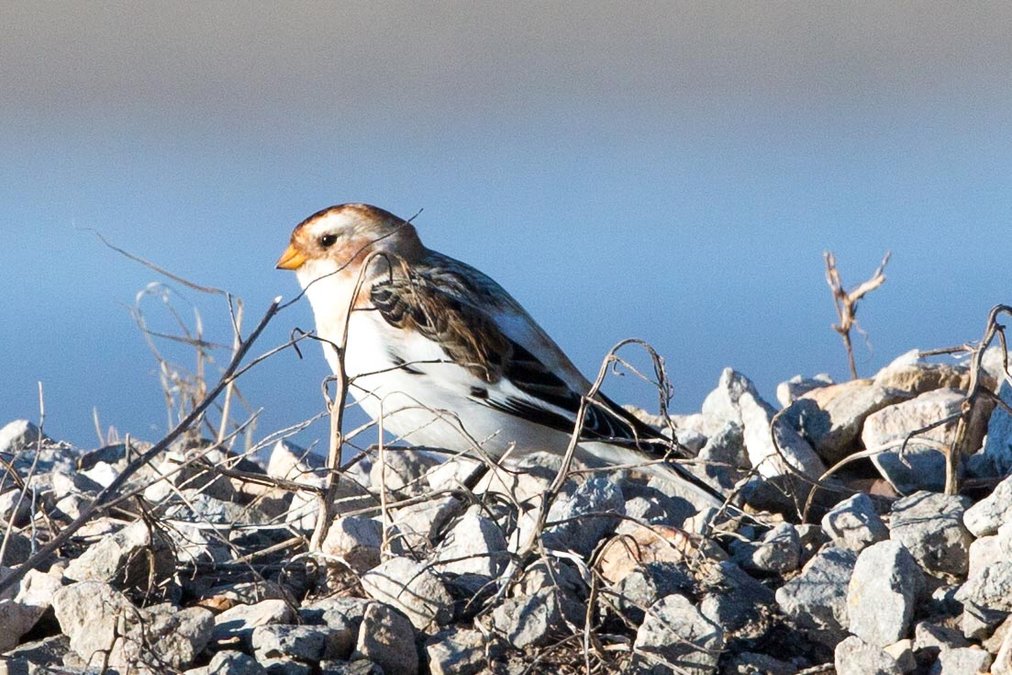
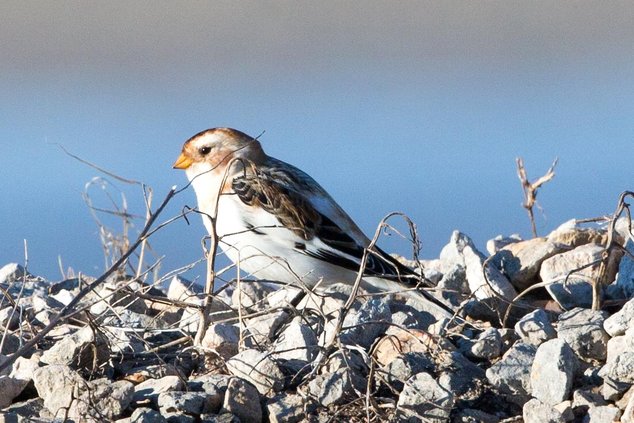
I don’t have any pictures to fit this topic. You get to see a Snow Bunting that appeared at Quivira in 2012. There is one somewhere here in Kansas right now that is generating some excitement. Not long until migration!
Doc
Doctor Dan Witt is a retired physician and nature enthusiast. He can be reached at danwitt01@gmail.com.