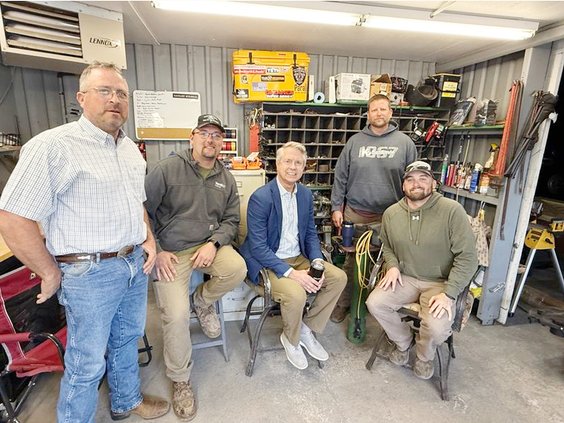
This week, Sen. Roger Marshall, M.D. (R-Kan.), made stops in several area counties. On Tuesday, staff reported stops in Ness, Rush, and Pawnee counties, where he met with rural health providers, farmers, and livestock producers to discuss strengthening rural health care, supporting conservation practices, and expanding opportunities for Kansas agriculture.
Senator Marshall started the day meeting with leadership at the Ness County Health Department to discuss the essential services the department provides, including immunizations, health screenings, home health care, WIC nutrition support, and family planning.
Staff reported their discussion focused on policies impacting rural providers, including funds that Senator Marshall fought for in the Rural Health Transformation Fund, which delivered $221.9 million directly to Kansas to support long-term sustainability for rural health systems. Senator Marshall also highlighted FY26 appropriations priorities to strengthen rural hospitals, expand workforce pipelines, and improve access to care in rural communities.
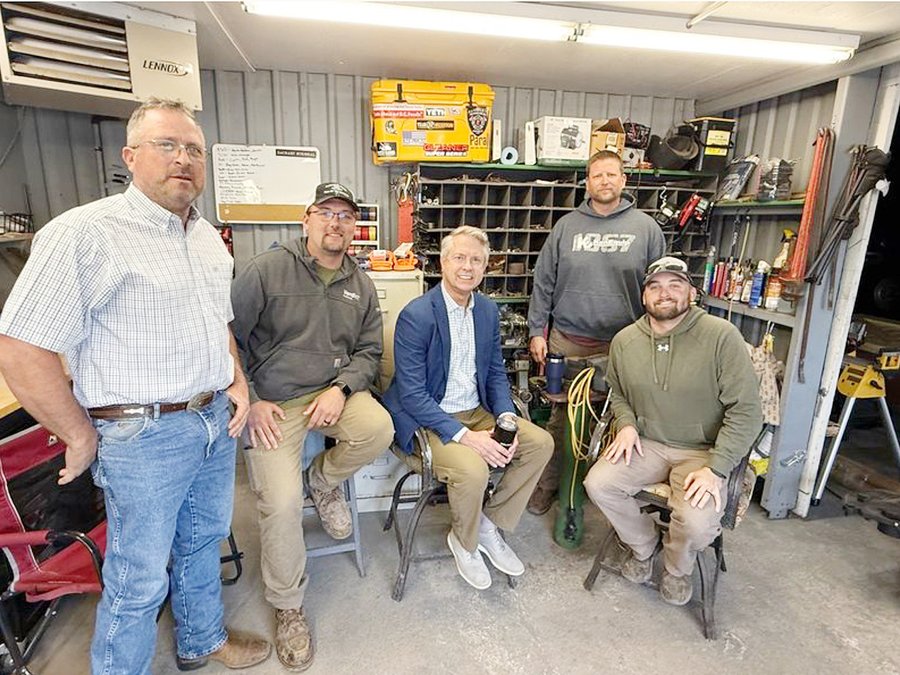
Zach Stejskal Farm
At Zach Stejskal’s farm, Senator Marshall learned about conservation practices they are implementing, including terracing and no-till farming, supported by the National Resource Conservation Service and the local conservation district. These practices help reduce runoff, improve soil health, and strengthen long-term productivity for Kansas producers.
Senator Marshall discussed wins secured through the Working Families Tax Cuts, including crucial updates to crop insurance, reference prices, base acre updates, and beginning farmer qualifications.
Into Barton County; technology and tractors
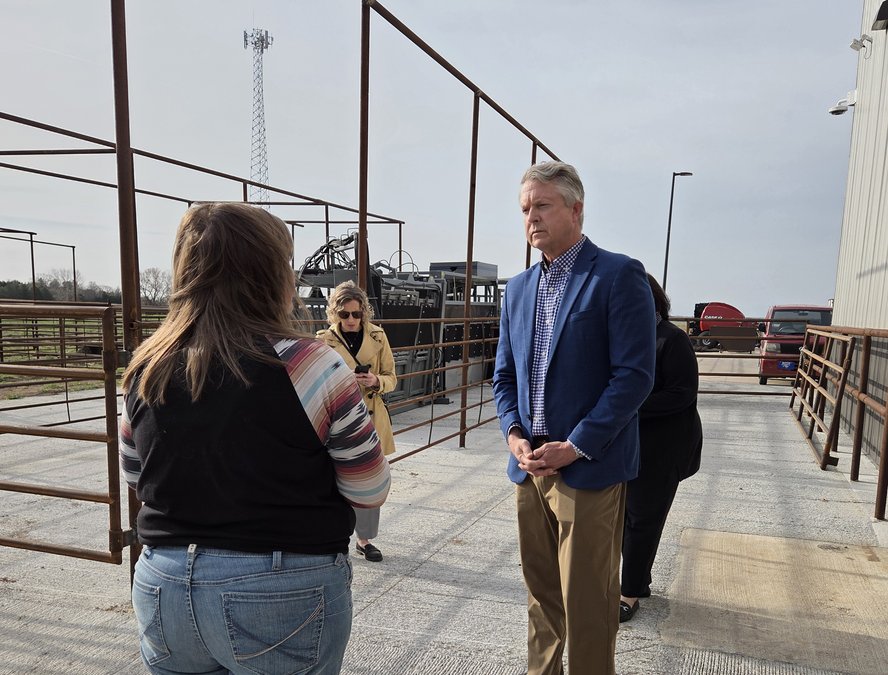
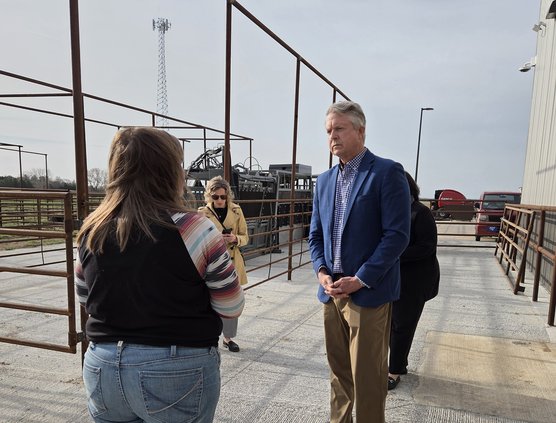
Marshall mentioned the Ness County stop on Wednesday, when he toured the Ag and Transportation Complex at Barton Community College. Mark Bogner, technical training coordinator of the Case New Holland program at Barton, talked about the use of technology that can drive tractors and more.
“Tell me what your students are doing to adapt to that opportunity,” Marshall said.
“On the precision side, it’s more along the technology side, within the piece of equipment. So as things progress, we get away from levers, right? We don’t have levers that move things anymore; everything is electronic. Now we can have the ability to configure different things for different applications,” he said.
“And taking that even further, we can have a piece of equipment command the tractor. Take, for instance, a round bale. You make a round bale, you come to a stop. The baler ties the bale. You have to hit the lever, open the tailgate, eject the bale and take off. Now the baler will tell the tractor when to stop. The tractor will stop all by itself, and baler will tie the bale. Gate will open, bale will come out, tractor will take back off. That’s one side of it. The other side will be the steering side. So now we have what they call a LiDAR sensor that sits on top of the cab. It doesn’t necessarily run on guidance, but it sees the shape of the windrow and drives the track accordingly. So understanding how all those systems function together, and what little things can go wrong here and there in order to keep that entire system running, that’s what we spend a lot of our time on.”
Ag instructor Vic Martin mentioned how this applies to his classes. “You just mentioned technology. I could be out in the field in one of these things, and I have access to all sorts of information. The trouble is understanding it and doing something with it. We are generating more data than farmers know what to do with.”
“And that’s where AI is going to come in,” Marshall said. “We say AI; it’s really just machine learning. But you’re right, we have to teach kids to think, too.
“And unfortunately they’re being spoon-fed because of access to all the social media and stuff,” Marshall said. “But you’re right, we have to teach them to think and how to apply it. We met with four young farmers yesterday at Ness County. And you know, they’re thinkers and they’re making money. And why are they making money and nobody else? Because this technology is just secondhand today. They’re not having to sit there and think about it; it’s very intuitive how to use it. They talked about a person that took some marginal cropland and put it into pasture land, and there’s a better return on cattle right now than there is on corn and wheat. So, you know, the opportunities are out there.”
Delivering for higher education
While visiting Barton Community College on Wednesday, Sen. Roger Marshall shared his bullet points for how he is “delivering for higher education” by empowering students and protecting students.
• Advocated for and secured Workforce Pell reconciliation. This provision allows students in short-term programs to now access Pell Grants.
• Secured fix to FAFSA (the Free Application for Federal Student Aid) so assets within farm and small business families aren’t penalizing students in financial aid calculations.
• Preserved full Pell Funding and eligibility in reconciliation.
• Cosponsored the College Transparency Act, which would aggregate tuition costs and outcome data at higher ed institutions for students to compare.
• Sponsored the Pathways to Prosperity Act which authorizes grants for community colleges to start or enhance workforce development programs.
• Supported President Trump’s executive order banning men from competing in women’s sports and invading female spaces.
• Supported President Trump’s executive order empowering agencies to hold higher education accreditors accountable.
Source: Sen. Roger Marshall, M.D.