By allowing ads to appear on this site, you support the local businesses who, in turn, support great journalism.
Here’s a real path to ending Iran war

edi_lgp_weltimug
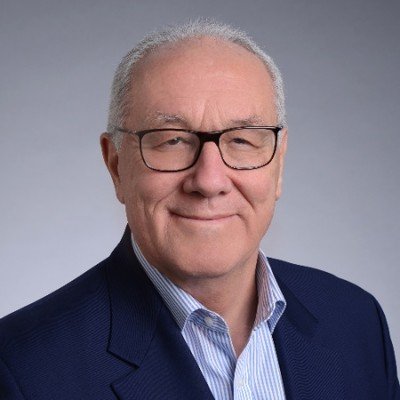
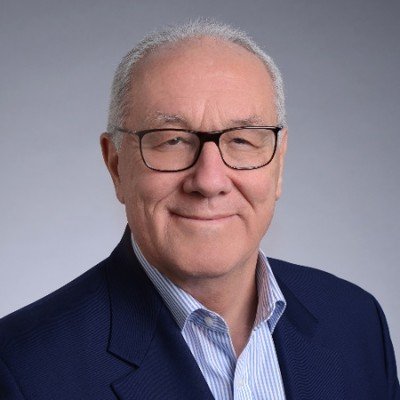
PhilippeWelti

With initial peace talks failing and President Trump imposing a blockade on Iranian ports, the risk of renewed conflict between the United States and Iran is rising -- in the skies over Tehran and Isfahan, across the Persian Gulf, and potentially on the ground.

But this conflict will not be settled by military force. It will end through quiet diplomacy. As Switzerland’s former ambassador to Iran, where I represented U.S. interests, I have seen firsthand what it takes for both sides to reach a durable agreement.

Switzerland has been the neutral intermediary for countries without diplomatic relations for more than 150 years, acting as a “protecting power” and facilitating communication between adversaries. This role began during the Franco-Prussian War of 1870 and has since extended through some of the world’s most consequential conflicts, including representing up to 35 countries during World War II.

Our experience as trusted go-between explains why the United States has repeatedly turned to Switzerland on diplomacy. In 1961, after Washington severed ties with Cuba, Switzerland served as protecting power and kept that role until relations were restored in 2015. We continue to represent Cuban interests in the United States today.

Switzerland has also long represented U.S. interests in Iran. After the 1979 hostage crisis, Washington cut diplomatic ties and asked Switzerland to step in, which it did in 1980. Since then, Switzerland has provided a vital backchannel, including hosting negotiations that led to the 2015 nuclear agreement.

From decades of managing the U.S.-Iran relationship, two lessons stand out. First, backchannels must remain open, regardless of ongoing conflict. It is essential that someone can always talk to both sides. Such communication has prevented escalation countless times.

Following the U.S. killing of Iranian General Qassem Soleimani in January 2020, Washington relied on Swiss intermediaries to send messages to Tehran and contain the crisis. While public rhetoric was heated, more measured exchanges almost certainly took place behind the scenes. A country that is recognized as neutral and independent is the only kind that can play this role effectively. Pakistan, which represents Tehran’s interests in Washington, has thus far hosted talks – a constructive effort. But both sides have reason to question its neutrality. Pakistan carried out airstrikes inside Iran in January 2024 and has supported the Afghan Taliban against U.S. forces. Meanwhile Switzerland is not associated with military interventions or proxy conflicts.

Second, peace agreements endure only when all sides obtain some measure of success. One-sided settlements breed resentment and can sow the seeds of future conflict. The Treaty of Versailles is a clear example: while it ended World War I, it also helped create the conditions for the Nazi Party’s ascent and the start of World War II.

This does not mean every agreement must fully satisfy all parties. But it must be balanced enough to allow each side to maintain dignity.

Today, Iran is seeking compensation for damage from U.S. strikes, while Washington has offered sanctions relief and access to frozen assets in exchange for concessions. If the money moves, both governments could present the outcome as a win at home.

Switzerland has long believed in maintaining dialogue when others cannot. As tensions rise and economic consequences spread, it stands ready to support both parties once again — offering the trusted mediation this conflict will ultimately require.

Philippe Welti served as Switzerland’s ambassador to Iran and, in his capacity as protecting power, represented U.S. interests in Tehran. He is also a co-founder of Share-an-Ambassador, a geopolitical consulting firm. This material is distributed by Keybridge Communications on behalf of the Faith Whittlesey Society. Additional information is available at the Department of Justice, Washington, DC.