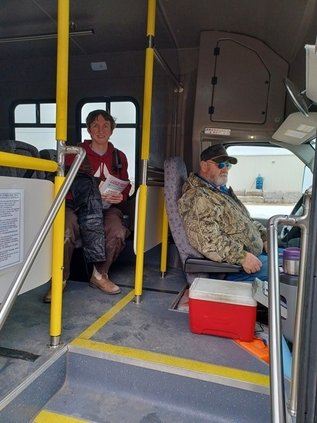
With a deadline hours away, the Great Bend City Council called a special meeting Thursday morning and approved a letter of commitment to help the Commission on Aging apply for a grant for two public transportation vans.
Brenda Lebbin, director of the Great Bend Senior Center and General Public Transportation - Commission on Aging, said the application to the Kansas Department of Transportation was due at 3 p.m. that day.
With Councilman Kevyn Soupiset joining by phone, the council approved the request 8-0.
City Administrator Logan Burns said the application includes a ramp-accessible minivan estimated at $85,000 and a full-size van estimated at $110,000. A 10% contingency brings the total to $214,500, and the city’s 20% match would be $42,900.
The matching funds would come from the 2028 budget, which has not been approved. “The current city council cannot obligate a future council to an expenditure that has not yet been budgeted,” Burns said.
The letter of commitment instead names the Capital Equipment Reserve Fund as the funding source for the application.
“This would demonstrate the city’s financial commitment while allowing the council to consider an alternative funding source during the 2028 budget process,” Burns said.
The new vehicles would replace two with more than 100,000 miles each, one with 115,680 miles and the other with 127,350. Lebbin said the agency would not receive the new vans until the end of 2028.
“We need to remember this is not a luxury; it is a lifeline,” she said.
The service has operated in Great Bend for at least 30 years and has always been part of the KDOT transit program.
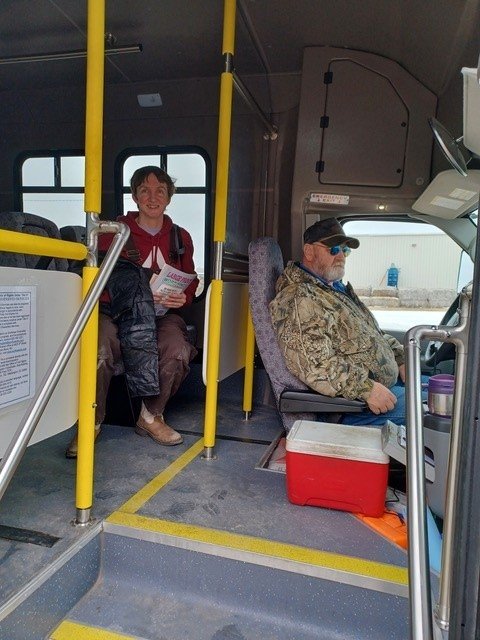
“Our seniors, individuals and residents with disabilities who no longer drive, and those without reliable transportation, depend on these services like city buses to remain active and connected to the community,” she said. “These buses provide access to medical appointments, grocery stores, employment, community activities, education and essential services.”
The vehicles provided 24,642 rides within Great Bend last year.
“That’s 24,000 opportunities for someone to get out to their medical appointment, to the cancer center, to their dialysis,” Lebbin said. “Some people to buy groceries, to get to work, pay their bills, attend community activities, or simply maintain their independence, which is important for our seniors, individuals and general public.”
Aging fleet,
staffing shortage
The agency has four KDOT vehicles: three full-size vans and one minivan. Under state rules, the agency may apply for a replacement once a vehicle is five years old or has more than 100,000 miles.
The agency also totaled a vehicle and is using a city-owned vehicle as a spare. Because that vehicle is not owned by KDOT, it no longer qualifies for state funding. “It has well over 120,000 miles on it, but we can’t trade that one in,” Lebbin said.
To replace the totaled vehicle, Great Bend is on a waiting list. Some western Kansas agencies drive their vehicles fewer than 15,000 miles a year, and a low-mileage vehicle can be transferred from one of them to an agency in need.
The agency is also short on staff. “I’m down to three employees and three buses,” Lebbin said. “I’m working those drivers, crazy, but trying to find help right now has been hard. But we’re keeping the buses going.”
The vehicles are showing their age despite following all maintenance guidelines, Lebbin said. They never leave the city limits and sit idling in winter to keep them warm. “It’s just hard on them,” she said. “We put on 80 to 100 miles a day on one vehicle.”
KDOT guidelines require the agency to buy from an approved vendor. Lebbin said the choices were Kansas Truck of Wichita and a company in Ohio, so the agency uses Kansas Truck.
When the new vehicles arrive, the agency can sell the old ones, which usually bring about $4,000, Lebbin said. The agency keeps proceeds under $5,000. “If it’s over $5,000, we send it back to KDOT.”