LARNED — It’s been more than two years since Larned State Hospital clinician Dr. Tomas Garza was fatally shot at a rural warehouse south of Larned. It has also been more than two years since the man accused was arrested and taken into custody; more than 18 months since the Pawnee County Attorney’s Office assembled its case and a year since a prospective juror list was generated in anticipation of a May 2025 trial.
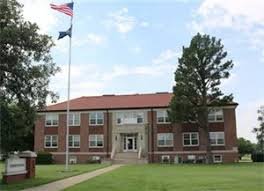
As the case against Michael E.G. Reynolds, 69, who was judged incompetent to stand trial last February, languishes at the Pawnee County Courthouse, across Eighth Street in Larned the defendant remains incarcerated at the Pawnee County Jail.
Reynolds is awaiting court-ordered 90-day competency restoration treatment in one of the state’s mental health institutions.
Why? The state has been mired in a multi-year forensic backlog based on lack of bed space. Estimates regarding waitlists for forensic evaluations and competency restoration treatment indicate a total of 200 of the state’s defendants remain jailed waiting for services at LSH as the state’s primary facility for such court-ordered services.
Indeed, the backlog numbers themselves are in question; the most recent waitlist data provided by the Kansas Department for Aging and Disability Services does not extend further than January 2026.
On March 3, KDADS Deputy Secretary Scott |Brunner provided month-to-month statistics for the Johnson County Criminal Justice Advisory Council that included competency wait times and mobile competency dating back to January 2025. Those statistics showed a peak in December 2025, with the number of waiting male defendants at 185 and female defendants waiting at 25. Brunner’s statistics noted that of the 177 males waiting at the start of this year, 150 (85%) of the males were waiting for restoration treatment.
This is in spite of a settlement reached with KDADS in 2024 favoring ACLU of Kansas, whose 2022 lawsuit in federal court maintained that the excessive waitlist numbers as well as wait times of more than 13 months in some cases, both violated defendants’ constitutional rights and exacerbated mental health issues. In December 2023 a federal judge blocked ACLU of Kansas’s request to halt the practice, but the case was settled with KDADS’ agreement to open 30 additional beds by January 2025 and up to 52 by 2027.
While a 104-bed evaluation facility is being constructed in Wichita and plans were formulated to open a previously-closed 30-bed wing at LSH, KDADS has resorted to utilizing mobile evaluation teams beginning in 2025 and continuing them into 2026.In his March 3 report, Brunner noted that a contract was made with Wheat State Healthcare to coordinate competency services with a number of Community Mental Health Centers (CMHCs) in the state. Through four quarterly tallies, Brunner reported a total of 569 CMHC-provided competency evaluations for defendants and 38 competency restorations completed in 2025. He also reported that counties could be reimbursed for costs at $100 per day due to delays in admission to either LSH and Osawatomie State Hospital dating back to July 1, 2022. The amount includes days accrued in transport or awaiting transport in a quarterly payment process.
Legislative inaction
The Kansas Legislature continues to sidestep certain aspects of the forensic evaluation issue, facing scrutiny for delaying a ban of “archaic” psychiatric exams for crime victims as well as failing to address the massive backlogs in competency evaluations. This, adding to a “mens rea” approach abolishing the traditional insanity defense casts a contentious light on forensic and mental health evaluations in the state.
On March 11, Deputy Secretary Brunner presented neutral testimony to the House Committee on Corrections and Juvenile Justice regarding SB 374, which would require further consideration of evaluation and treatment during the course of competency proceedings for defendants charged with the most serious offenses.
Brunner noted that passage of the bill would negatively impact the availability of inpatient competency beds in removing the option for evaluations to be performed by community providers. He also noted that its passage would also negatively impact the 2024 settlement agreement reached with KACLU inhibiting defendants’ progress through the competency process.
‘And so we wait’
Meanwhile, Pawnee County Attorney Douglas McNett has turned his attention to other cases while the Reynolds case remains stayed. He explained that the clock for the 90-day competency restoration begins when Reynolds arrives for forensic treatment, no matter how many weeks and months transpire until that time.
“Effectively, our hands are tied on this,” he said. “We really have no way of knowing how long this stage will take to play out; we can’t even estimate when we might be looking at the calendar to set a court date for trial.”