The viruses that cause wheat streak mosaic need no introduction in many parts of Kansas. Wheat streak mosaic is one of the most economically devastating wheat diseases in the state. Although statewide levels are lower than in 2025, we are again seeing wheat streak mosaic infections in many fields.
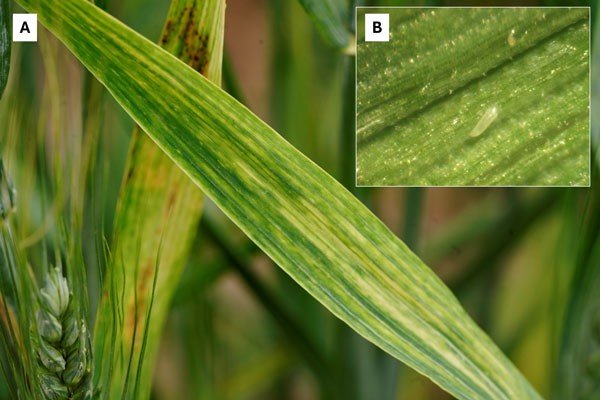
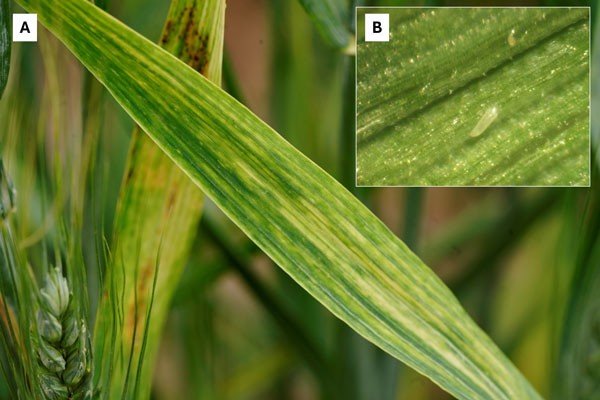
Wheat streak mosaic complex is caused by several viruses, including wheat streak mosaic virus, triticum mosaic virus, and High Plains wheat mosaic virus. These viruses are transmitted by the tiny wheat curl mite, which survives between seasons on volunteer wheat and other grassy hosts. Infections can occur in the fall or spring but can result in more severe yield loss when they occur in the fall after planting. Wheat streak mosaic symptoms develop most rapidly at temperatures above 70 degrees F. We often see symptoms appear when temperatures warm in the spring. Symptoms appear as green and yellow streaks on wheat leaves. Infected plants may be stunted with reduced tiller numbers, particularly if infections occurred in the fall.
The best management strategy is to destroy volunteer wheat immediately after harvest and maintain a “wheat-free period” over the summer months. There are some varieties that carry limited resistance to these viruses. More info on how your varieties stack up against this complex of viruses can be found in the Kansas Wheat Variety Guide: https://bookstore.ksre.ksu.edu/pubs/MF3383.pdf
Sample Submission to K-State Disease Diagnostic Lab
When in doubt, wheat samples can be submitted to the K-State plant disease diagnostic lab or your local Extension Office. (https://www.plantpath.k-state.edu/extension/plant-disease-diagnostic-lab/). As a reminder, a well-submitted sample earlier in the week, and fast shipping (FedEx or UPS, not USPS) are key to a good diagnosis. Any questions about collecting a sample and submission to the lab can be directed to your local Extension Office.
Stacy Campbell is an Agriculture and Natural Resources agent for Cottonwood Extension District. Email him at scampbel@ksu.edu or call the Hays office, 785-628-9430.