Cabbage, broccoli, and Brussels sprouts are a few of nature’s detoxifiers. Maximize the benefits with proper care, harvesting and a second planting.
Protect existing plantings from caterpillars that eat holes in the leaves of these plants. These worm-like insects are the immature stage of several different moths. Regularly check along the stems and between leaves and destroy any gelatinous eggs and green caterpillars you find. Apply Bacillus thuringiensis kurstaki, a naturally occurring soil bacteria, that kills only true caterpillars and is safe for people, pets and wildlife. As always, read and follow label directions for the most effective control.
For future plantings, cover the plants with floating row covers at the time of planting. These fabrics made of polypropylene spun material allow air, light, and water through while preventing cabbage worms from laying their eggs on the plants. This means no caterpillars eating holes in the leaves or ending up on your dinner plate.
Loosely cover the planting with the fabric and anchor the edges with boards, pipes, stones, or wickets. Leave enough slack for the plants to grow. The plants support the fabric, so no frames or construction is needed.
Harvest cabbage when the heads are firm and full size. Use a sharp knife to remove just the cabbage head, leaving the lower leaves and roots intact. Four to six new heads will arise from buds around the stem. These smaller heads can reach four or five inches in diameter.
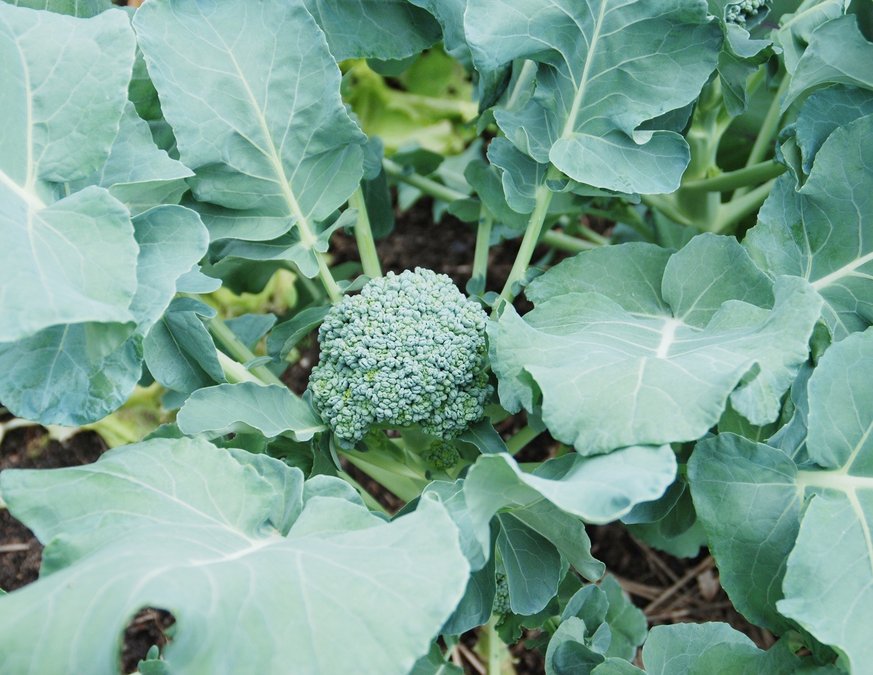
Harvest broccoli when the flowerhead is full size and before buds open for the best flavor. Make the cut about 5 to 6 inches below the head, leaving the rest of the stem intact for sprouts to form. Harvest the sprouts throughout the remainder of the season.
Brussels sprouts take more time to reach a harvestable size. Pinch out the growing tip when the sprouts at the bottom are ½ to ¾ inch in diameter to focus the plant’s energy on the existing sprouts for an earlier harvest. Harvest the sprouts when firm and one inch in diameter.
Fill vacant spots in the garden with a mid-summer planting of cabbage and broccoli for a fall harvest. Depending on the length of your season, you can start with seeds or transplants. Check seed packets and plant tags for the number of days from planting to harvest. Compare this to the number of frost-free days left in your growing season to determine when to plant. Fortunately, these plants tolerate and their flavor improves with fall frost temps down to 26° F. When colder temperatures are in the forecast, cover the plants with floating row covers to extend the harvest.
Further increase your garden’s productivity by interplanting the cabbage and broccoli with quick maturing radishes, beets and heat tolerant greens. You’ll harvest these short season crops at about the time the cabbage and broccoli need the space.
Enjoy the abundant harvest and share extras with family, friends and your local food pantry.
Melinda Myers is the author of numerous books, including Small Space Gardening. Myers web site is www.MelindaMyers.com.