Larned City Council meeting at a glance
Here is a brief look at what the Larned City Council did Monday:
• Approved Appropriations Ordinance No. 1 in the amount of $924,836.74, plus transfers.
• Under new business, approved the city’s means to continue with desired diesel fuel usage by accepting a Pawnee County Coop Association bid of $2.70 per gallon of off-road (dyed) diesel and $2.97 per gallon of on-road (clear) diesel for city vehicle use with the total amount being 11,000 gallons for the time period of Feb 1 through Oct. 31. The city has approved “locking in” fuel purchase prices for the last several years as a hedge against inflation. Councilman Kim Barnes recused himself for council discussion and resulting approval vote.
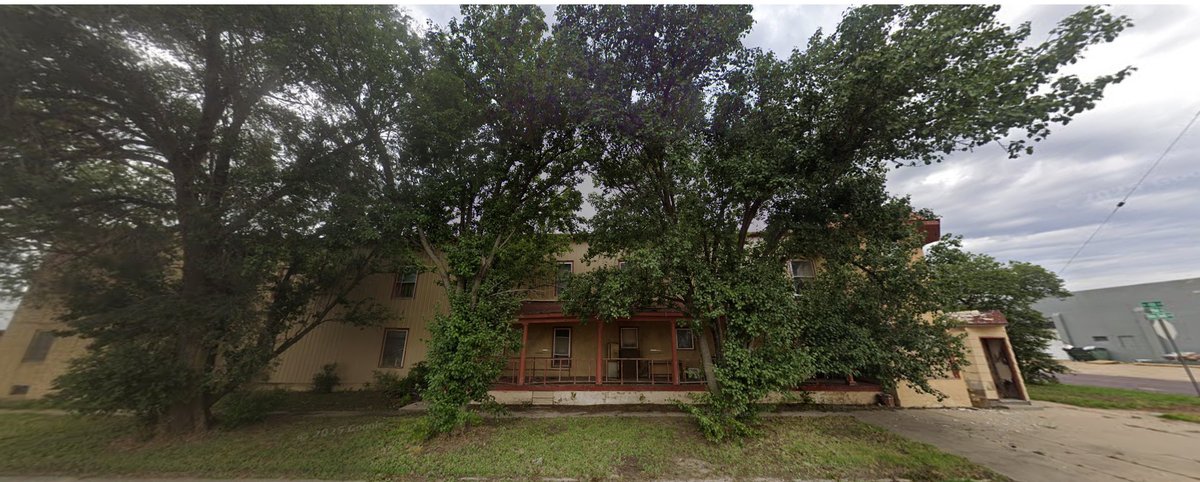
• Accepted the first six properties as candidates for inclusion in the city’s newly-approved Land Bank Program. Last November, the council agreed to operate a land bank as authorized by K.S.A. 12-5901 et seq as an instrument to acquire, manage, maintain and re-purpose vacant, abandoned and tax-delinquent properties in the city limits. Approved for inclusion are current vacant and dilapidated structures at 415 E. Fifth St.; 503 Park St.; 323 Main St.; 419 Park; 224 Toles and 222 Toles. Operating a Land Bank by the city incurs no initial costs beyond filing and administrative expenses. Maintenance, such as securing property title, mowing and weather-related expense incurs tabulated costs that are reviewed by the council at the time the property is sold.
• Following an informational report from Fire Chief T.J. Hearn, approved purchase of a Self-Contained Breathing Apparatus air compressor for the fire station funded by Fire Department Reserve.
• Set a work session with the Larned Country Club board for 6:30 p.m. Feb. 25.
• Heard a presentation by City Mechanic Joe Schartz on the current status of his department.
• Heard a presentation by Street Supervisor Adam Perez on upcoming concrete street repair options.
LARNED — At Monday evening's meeting, the Larned City Council accepted six parcels as inaugural entries into its newly-created Land Bank program.
Last November, the council approved participating in the state authorized Land Bank program with a desire to acquire, manage and redevelop blighted, abandoned or tax-foreclosed properties as a means to address blighted properties and structures and improve development-supported property values. KSA. 12-501 was enacted in 2009 providing that the governing body of any city in the state may establish the program by passage of an ordinance. As of 2019, there were more than 23 active programs in the state, with the city of Wichita establishing a program in May 2021.
The council then discussed the condition of the properties at 415 E. Fifth St., 503 Park Ave., 323 Main St., 419 Park Ave., 222 Toles and 224 Toles with City Building Inspector Will Tice.
Tice noted that the majority of the properties have structures facing demolition.
Currently, the vacant and dilapidated structures at 415 E. Fifth St., 503 Park Street and 323 Main St. are being processed by the building inspector through the Larned Municipal Court.
Tice noted that he had not inspected the interior of the residences at 415 E. Fifth and at 503 Park, but added that the garage at 503 Park appears to need demolition based on exterior evaluation. In addition, he recommended the demolition of 323 Main St., due to the condition of the roof and subsequent weather damage.
City Attorney Mark Tremaine noted that the properties, once cleared, could be marketed for sale as suitable for building by a potential developer.
Tice noted that the council would need to agree to accept the properties into the land bank before any further action could be taken.
Councilman Jason Murray noted that it would be advantageous to establish a procedure for bringing a property into the land bank inventory.
“It could be a circumstantial (case-by-case) scenario, but it would be nice to know what our vision is to know how to handle a property.
“It might be that we could get rid of the structure, but then we have the trees and fences around, so then what do we do?” he asked.
“According to state statute, there are things that we can do and things we can’t do,” Tice responded.
The council voted unanimously to admit the six parcels into the land bank program, dependent upon the property owners’ desire to complete a quit claim deed allowing the city to take ownership.
Should the situation warrant, the council would then convene in special session to determine future procedures.
By state statute
By statute, Kansas land banks are required by state statute to maintain a comprehensive, written inventory of all acquired properties.
Land Banks must manage, protect, and analyze these properties for re-utilization, while keeping detailed records of all transactions, expenditures, and revenues.
Key Tracking Requirements
• Inventory Maintenance: Land banks must compile and maintain a written inventory of all property they hold.
• Annual Reporting: An annual report, including an inventory of all property held and yearly record of property transactions, must be submitted to the governing body and published in the official newspaper by Jan. 1.
• Public Record: All records and accounts, including property inventory, are subject to public inspection.
• Identification: Properties are tracked using legal descriptions and permanent parcel identification numbers, often coordinated with the County Appraiser.
• Property Disposition Tracking: Records must reflect the status of property, including when it was acquired (via deed/title) and when it is sold or disposed of.
Operational tracking methods
• Digital/Physical Records: While the statute mandates a “written inventory,” this is generally maintained through digital property management systems in coordination with county tax records.
• Title/Deed Records: Tracking begins when the bank receives the deed, confirmed by the county clerk’s office.
• Special Assessment Records: Land banks must keep records of special assessments and, if necessary, agreements for tax deferral or reamortization, as noted in Land Banks in Kansas-General.