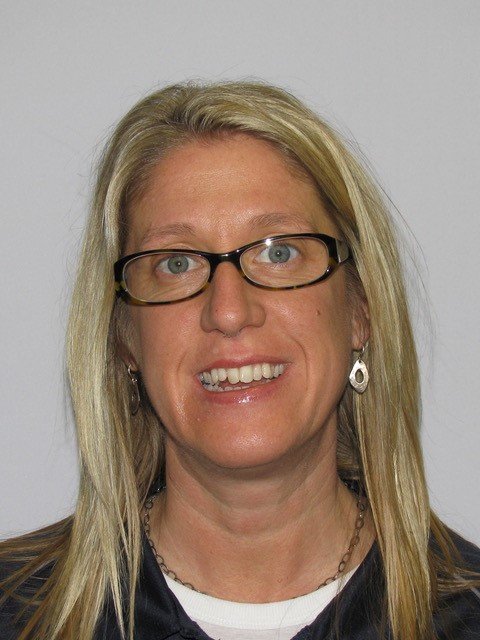
When Marissa Woodmansee attended a recent symposium in Topeka, she played the dual role of student and teacher.
Woodmansee, Juvenile Services executive director, learned more about the Stepping Up for Youth Initiative and shared insights about Barton County’s experiences during the pilot project, as well as plans for the second year.
- Stepping Up is designed to support young people in a behavioral-health crisis, and at risk of involvement with the juvenile-justice system or who are already involved. Barton was one of seven Kansas counties selected for the pilot program that began last spring.
“All of us at the symposium identified the importance of early intervention, family-centered care and school-based support,” Woodmansee said. “During my presentation, topics included evidence-based practices, trauma care, safe communication, recidivism, youth leadership and caregiver support.”
The local Stepping Up committee consists of professionals in the areas of mental and behavioral health, law enforcement, education, child advocacy and state government.
“The members of this great group collaborate with one another in support of young people who may be at risk,” Woodmansee commented. “We continue to meet monthly to share information.
“Nevertheless, we could use a little more help. First, we need at least one parent of a child who has been through the complexities of the juvenile-justice system. We could learn so much by hearing from a family first-hand about their experiences.”
Second, the group would appreciate more involvement from medical facilities. Currently, Heart of Kansas Family Health Care is the only such entity represented on the committee.
And third, “we could also learn from a representative of the 911 system,” Woodmansee noted.
Second year
Now that the Stepping Up pilot program is over, a priority is data collection. Local agencies are compiling data that will be analyzed at Barton Community College.
“Data is so important when we talk with local officials and legislators about the needs of the juvenile-justice system,” Woodmansee said. “We need to paint a clear picture and numbers allow us to do that.”
Another goal is to examine the number of local detention admissions, average length of stay in detention and cases of recidivism.
“We are setting our sights on reducing these numbers,” Woodmansee said. “In addition, we want to increase the connections to local and state resources so that families have quick access to the support they deserve.”
Highlight
Woodmansee noted that a “big take-away for me” came when the keynote speaker, Thomas Eisenbarth, talked about a practical approach to handling pressure in life and on the job. Eisenbarth is a farmer and agriculture instructor at Highland Community College.
“He compared the feeling of being overwhelmed to a vehicle that is telling you to ‘check engine,’’” she reported. “You could put duct tape over the dashboard so that you don’t have to look at the warning. But as we all know, if you ignore it, things only get worse.
“The same could be said for our emotional dashboard,” she continued. “Our symposium group related to this analogy because of the young people we support, as well as for ourselves. If your check-engine light is blinking, it is time to seek support from family, friends and/or mental-health professionals.”
This advice applies to all ages, but especially to youth, she added. “If young people have easy access to support and services, maybe we could prevent problems that lead to detention and recidivism.”
20th Judicial District Juvenile Services empowers youth in Barton, Rice, Ellsworth, Stafford and Russell counties to achieve positive outcomes by offering Juvenile Intake & Assessment, Immediate Intervention, Intensive Supervised Probation, Case Management, Journey to Change, Life Skills, All Stars and Youth Crew. Parents and guardians also are offered The Parent Project. Visit 1800 12th in Great Bend or call 620-793-1930.