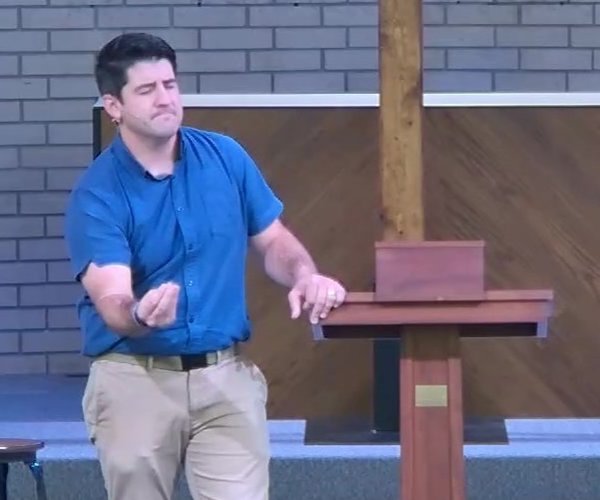
Not too long ago, I was listening to a pastor preach about the people we sometimes need to prune from our lives.
He used a tree as the illustration. His point was simple. When a branch is no longer bearing fruit, there comes a time when it needs to be removed. In much the same way, there may be people, relationships, habits, or influences in our lives that are no longer producing anything good, and sometimes we have to be willing to cut them away.
I understood what he was saying. There is truth in it.
But ... I am also an arborist.
And when you spend enough years looking at trees, you begin to see struggling branches through a different lens.
I remember sitting there thinking, “But what if the branch is not the problem?”
When I look at a tree and see a branch that has stopped growing, has fewer leaves, or is beginning to show dieback, my first thought is not usually to grab the saw.
My first question is, Why?
Is the tree getting enough water? Have the roots been damaged? Is something girdling the tree and restricting the movement of water and nutrients? Is disease present? Has the tree been under stress for years and we are only now beginning to see the symptoms?
A struggling branch tells me something is wrong. It does not always tell me where the problem is though.
That distinction has stayed with me because I wonder how often I have failed to make that same distinction with people.
I have had many people in my life change.
Someone who once seemed joyful became negative. Someone who used to call stopped calling. Someone who once showed up consistently became distant. Someone who had always seemed strong suddenly appeared discouraged, tired, or difficult to be around.
And if I am honest, there have been times when my first response was not curiosity. It was frustration.
Why are they acting like this? Why do they seem not to care anymore? Why am I the one putting in all the effort? What happened to the person they used to be?
Those questions can eventually lead us to thinking that maybe I need to distance myself. Maybe this relationship is no longer healthy. Maybe they are not helping me grow. Maybe it is time to prune this person from my life.
And sometimes, that may be true.
There are relationships that become unhealthy. There are behaviors that are destructive. There are situations where boundaries are not only appropriate, but necessary. But I am learning that before I reach for the saw, there is another question worth asking.
What happened to the branch?
Maybe the person in front of me isn’t producing much right now because they are hurting. Maybe something beneath the surface has been damaged. Maybe the support system they depended on disappeared. Maybe they are carrying grief they have never talked about. Maybe they are exhausted. Maybe they are afraid. Maybe they are fighting something privately that I know absolutely nothing about. Maybe life has compacted the soil around them so tightly that right now they are not trying to flourish.
Maybe they are just simply trying to survive.
Trees have taught me that what appears in the canopy is often only a symptom of something happening somewhere else. A tree may show yellowing leaves because of a root problem. A branch may begin declining because of something happening where it attaches to the trunk. Dieback high in the canopy may trace all the way back to damage underground.
What we see is real. But it may not always be the whole story. I think that people are much the same way.
What we see today may simply be the canopy. However, the real story may be hidden in the roots.
That thought has caused me to examine the way I sometimes evaluate relationships. There is something uncomfortable about realizing how easily we can begin measuring people by what they contribute to our lives. Asking ourselves, are they making me happy? Are they encouraging me? Are they helping me grow? Are they adding value?
But the people we love are not valuable only because of what they produce for us.
I have needed people who stayed close to me during seasons when I was not at my best. There have been times when grief, stress, responsibility, exhaustion, or my own shortcomings changed the way I showed up. There have been seasons when I know I was not giving the people I loved the best version of myself.
I am grateful they did not all reach for the saw. That realization changes the way I think about fruit.
Sometimes love means enjoying what another person brings into our lives. Sometimes love means helping nourish the branch.
Every meaningful relationship will eventually experience seasons when one person carries more than the other. Marriage does. Friendship does. Family does.
There will be seasons when someone else has the strength to help carry us. And there will be seasons when God gives us the strength to help carry them.
Galatians 6:2 tells us, “Bear one another’s burdens, and so fulfill the law of Christ.”
That is a much more demanding picture of relationship than simply asking whether someone is making my life better. But compassion does not mean abandoning wisdom.
Healthy trees still require pruning
There are branches that are dead. There are structural defects that create danger. There is disease, decay, and damage that cannot simply be ignored because we hope things will improve.
Relationships can be that way too. There are times when boundaries are necessary. There are relationships where trust has been repeatedly violated. There are behaviors that cannot continue without consequences.
Grace does not require us to pretend damage is not happening.
But as in good arboriculture practices, it also does not begin with the saw.
It begins with diagnosis.
And I think there is another part of that diagnosis I need to be more careful about.
Before deciding that someone needs to be pruned from my life, I need to ask whether God is actually leading me toward that decision, or whether I am simply looking for relief from a relationship that has become difficult.
Those are not always the same thing.
Sometimes God does move people out of our lives. Sometimes He creates distance, closes a door, or makes it clear that remaining in a relationship the same way is no longer healthy or wise.
But I also know myself well enough to know that discomfort can make almost any exit look like wisdom. It is much easier to call something pruning when what I really want is convenience.
That is an uncomfortable thought for me.
Am I asking God what He wants to remove, or am I asking Him to approve what I have already decided I no longer want to carry?
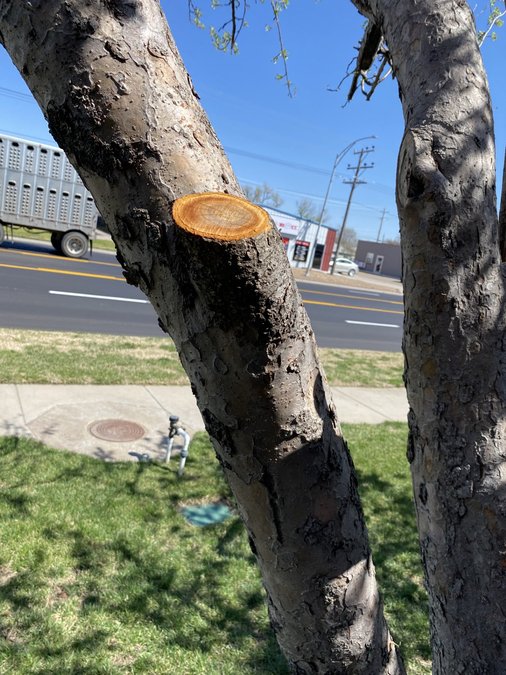
An arborist should not make a pruning cut because a branch has become inconvenient. The cut should have a purpose. It should serve the health, structure, safety, or future of the tree.
Maybe I should approach relationships with that same humility and ask is this cut serving something God is trying to grow, or is it simply making my life easier?
Before I decide someone needs to be removed from my life, have I taken the time to understand what changed?
Have I prayed about it? Have I listened? Have I asked what may be happening beneath the surface? Am I dealing with someone who is truly destructive, or someone who is simply wounded?
And perhaps the question that makes me the most uncomfortable...Am I judging their value by what they are currently able to give me?
I do not always get this right.
There have been times when I have been too impatient with people. There have been moments when I judged behavior before I understood the pain beneath it. There have probably been people who needed compassion from me and instead received frustration.
That is difficult to admit. But maybe that is part of looking at my own roots too.
Sometimes the problem is not only what is happening in the branch I am examining.
Sometimes there is something in me that needs attention. My pride. My impatience. My expectations. My desire for someone else to behave a certain way so that my life becomes easier.
The longer I work with trees, the more hesitant I become to make conclusions based only on what I can see from a distance.
People deserve that same patience. There may still come a time when pruning is necessary.
But I hope I become the kind of person who seeks God’s direction before making the cut, who reaches for understanding before separation, and who is honest enough to recognize when convenience is trying to disguise itself as wisdom.
Because sometimes the branch we thought was finished is not dead. It is stressed. It is wounded. Something beneath the surface has changed.
And sometimes, when the real problem is discovered and the right care is given, something remarkable happens.
Life returns. Growth begins again. Not always quickly. Not always in the same way it grew before. But enough to remind us that struggling and finished are not the same thing.
A Practice to
Cultivate
Think about someone in your life who has changed or become harder to understand.
Before deciding what needs to be cut away, ask yourself:
Have I really listened?
Have I prayed about what God may be asking me to do?
Is this person destructive, or are they struggling?
Am I seeking God’s direction, or simply looking for relief from something that has become difficult?
Then turn the question toward yourself.
Is there something in my own roots affecting the way I see this person?
Sometimes pruning is necessary. But before you make the cut, take the time to understand the tree and make sure you know whose hand is guiding the saw.
You may discover there is still more life there than you thought.
Stay rooted.
‘Well Rooted’ is a new column to the Great Bend Tribune written by Jeremy Elliott. Elliott owns a lawncare business and lives in the Great Bend area.