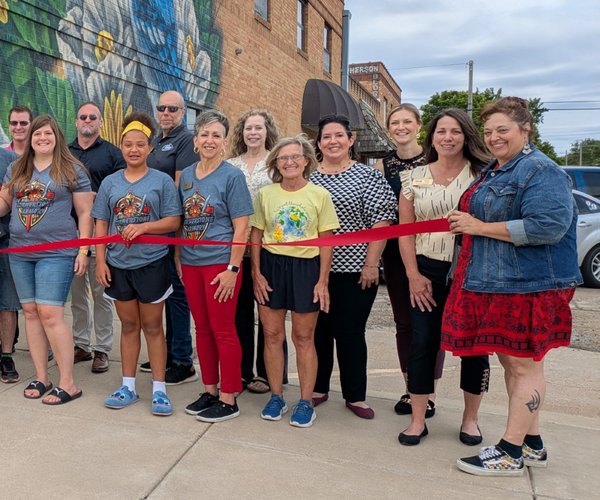
Representatives of two local agencies are sharing with their colleagues the information they gleaned at a recent training session, which they say will enhance their contributions to the local Multi-disciplinary Team (MDT).
Casey Rowland, family-engagement advocate at Juvenile Services (JS), and Kayla Bailey, Child Advocacy Center program director at the Family Crisis Center (FCC), attended the two-day training at Wichita.
The MDT consists of first responders, as well as professionals in the fields of education, child-protective services, child advocacy, the judicial system, and behavioral and mental health.
“We are what you might call secondary responders,” Rowland said. “Our staff members often hear from our local professionals who are first on the scene. Then we become part of the team that wraps around families with support and services.
“Juvenile Services comes at the issue from all angles,” she continued. “For example, after a first responder contacts us, we offer programs that start with an assessment and may, in some cases, lead to the court system – and everything in between.”
The recent training included real-life scenarios, such as a case of possible child abuse. This entailed a child telling his mom that the stepdad was inappropriately touching his siblings.
“The mom didn’t believe him,” Rowland said. “Therefore, the kiddo feels like he is in trouble and being attacked. He then shuts down.”
The training presenters walked the group through every facet - from the initial conversation to meeting with law enforcement and the county attorney, and ultimately to talking with a judge.”
“And, most important, we ensure the children are safe throughout this process,” Rowland emphasized.
Another part of the training focused on paying attention to co-workers who face “quite a bit of secondary trauma,” Rowland noted. “We see infants, toddlers and older children who have been neglected and are malnourished, and/or physically and sexually abused.
“Our clients go far beyond supporting a teenager who has gotten into a bit of trouble at school or home. If my colleagues and I don’t take care of one another, we can’t do what is best for families.”
Family Crisis Center
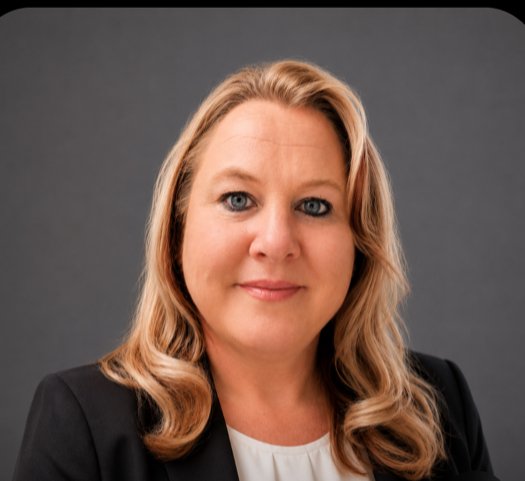
Kayla Bailey said it was important to represent the FCC at the training because “we felt it would be beneficial to gain knowledge alongside other MDT members to enhance our monthly meetings. We always want to better understand how we can make these gatherings more productive and effective.”
One training highlight for Bailey was reinforcing the idea that “we remain focused on facts, rather than assumptions or speculation. Another take-away for me was hearing how differently each person may view the same situation.
“This encouraged our group to incorporate a brief training session of trauma-informed practices before each case review.”
The FCC is using their new insights to “continue to build on our strong, resourceful and productive MDT. We hope to strengthen partnerships and increase understanding to better support families and staff.”
More information
The training was presented in partnership with Project FORECAST and Baystate Family Advocacy.
FORECAST is a specialized training designed to equip professionals who care for children. The problem-based learning goes beyond the textbook by bringing participants into real-world situations where they can use their knowledge and explore their assumptions, according to its website.
Students observe, discuss and make decisions that impact the simulation, while defining problems, uncovering information and collaborating about solutions.
Baystate’s core concepts of childhood trauma include: traumatic experiences are inherently complex; traumatic events often generate secondary adversities, life changes and distressing reminders; children exhibit a wide range of reactions; trauma affects the family; trauma and post-traumatic problems can strongly influence development; and working with these children can evoke stress in providers.
The FCC, 1924 Broadway in Great Bend, serves 10 counties – Barton, Barber, Comanche, Edwards, Kiowa, Ness, Pawnee, Pratt, Rush and Stafford. The number is 620-793-9941; the 24-hour crisis hotline is 866-792-1885.
20th Judicial District Juvenile Services empowers youth in Barton, Rice, Ellsworth, Stafford and Russell counties to achieve positive outcomes by offering Juvenile Intake & Assessment, Immediate Intervention, Intensive Supervised Probation, Case Management, Journey to Change, Life Skills, All Stars and Youth Crew. Parents and guardians also are offered The Parent Project. Visit 1800 12th in Great Bend or call 620-793-1930.